Stipple & Line

Finish-it-yourself vintage engravings

Finish the engraving.
Find the quiet.

Antique botanical plates, started in ink and waiting for you to finish the shading by hand — one stipple, one hatch at a time. A slower kind of coloring book, and a real skill you get to keep.

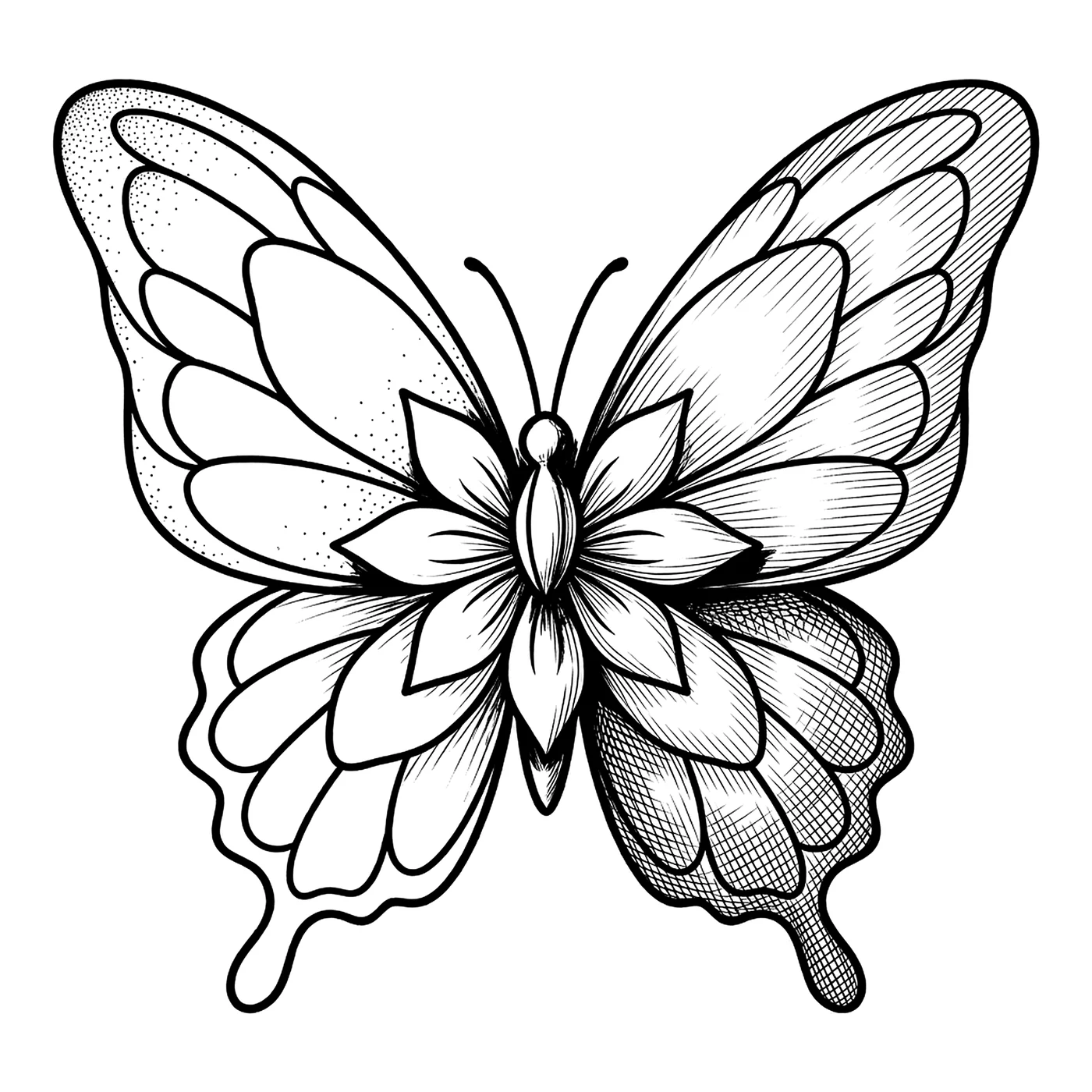
A butterfly engraving plate, partly finished: the lower wings are shaded in fine hatching and stippling, while the upper wings remain bare line art waiting to be completed.
A plate from Butterflies & Botanicals — started, not finished. The rest is yours.

Why these are different

Made by an actual person.

Every plate in every book is chosen and fussed over by one real, faintly perfectionist human (hi). No thousand-title content farm, no pages that come apart when you look closely. When the shadow under a moth's wing didn't feel right, I sat there until it did.

A skill you actually keep.

Most coloring books leave you exactly where you started. These hand you something: real pen-and-ink shading — stippling, hatching, cross-hatching — the same techniques behind the antique botanical plates you already love. You'll feel it settle into your hand by about the fourth page.

Honest about what it is.

This is a challenge, not a numbing scroll. It's slower than coloring, and it asks a little something of you — which is exactly why the finished plate feels like yours. I'd rather tell you that now than have you find out at page one.

Made for pens, made to keep.

Pure black and white, printed one side only, friendly to fineliners, and clean enough to photocopy if you want a second go. Every finished page is ready to frame — or to feel quietly smug about. Your call.

How it works — four patterns, light to dark

You don't need to know how to draw. You need to know four things, and the first page of every book teaches them in about a minute:

  • Stipple Scattered dots, for the lightest tones.
  • Hatch Parallel lines, for the mid-tones. Closer together = darker.
  • Cross-hatch A second set of lines crossing the first, for the deep shadows.
  • Solid Filled black, for the very darkest hollows only.

Each plate is already started for you in a few spots — you just carry the pattern outward, and leave the brightest places as bare white paper. That's the whole method. Everything after that is just time well spent.

Meet Elle

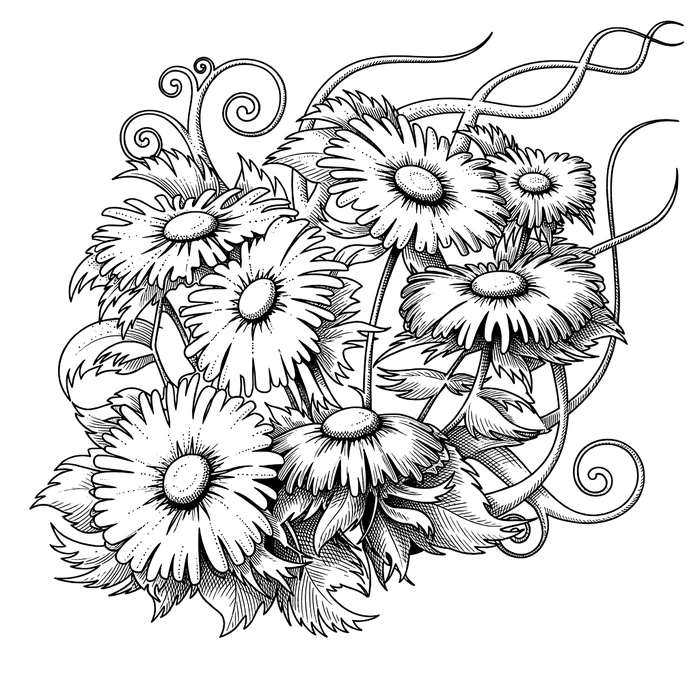
An engraving plate of chamomile daisies, the blooms shaded in delicate stippling and the leaves in fine hatching.
Chamomiles, fussed over until they felt right.

Hi — I'm Elle.

I'm a psychologist, so I spend my days in words. These books are what I make when the words run out.

Full disclosure: I'm not a colorist. (I know — the person making coloring books doesn't color. Stay with me.) I'm a self-taught designer and a lifelong amateur, and a geek at heart — the kind with strong opinions about fonts and kerning (see: geek). Digital design is my intellectual playground: creativity and precision in the same breath. I don't really start from a blank page so much as fuss over something that already exists until it's a little more pleasing to the eye, one detail at a time.

I've been playing at this for over ten years — and for a long time, I kept it undercover. There was a loud critic in my ear insisting an amateur had no business making anything for anyone else to see. I know that critic well; managing it is, as it happens, what I do for a living. What I've learned slowly, in my own hands, is that making something imperfect and letting it be enough is its own kind of practice. The finished page has never really been the point. The hour was.

That's what I hope these give you. Not a test you can fail — there's genuinely no doing it wrong here — but a slice of time that's quiet, absorbing, and meaningful in its simplicity. One tiny stipple. The easy rhythm of a hatch. The small magic of a few crossed lines becoming a shadow. The details really can be lovely.

Now go find a good pen. Splurge on it! And enjoy.

— Elle
Finishing notes — a few plates, in my own hand

Not rules — just how I'd approach them. You should feel completely free to ignore me and make them yours.

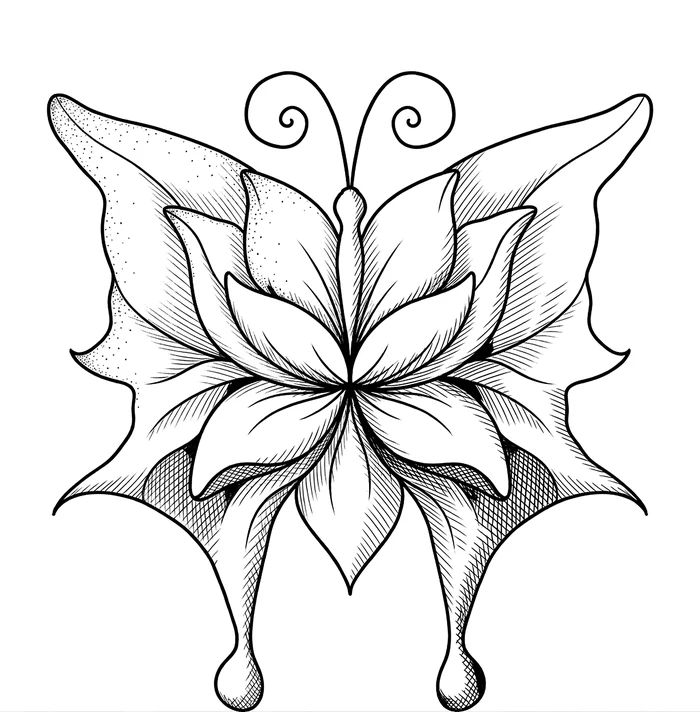
An ornamental butterfly engraving with petal-like wings, partly shaded with hatching along the wing edges.

From the butterfliesLet the wings breathe

Keep most of the upper wing as bare paper and only hatch the bands of shadow near the body, so the light still reads as light even in black and white. Save your cross-hatching for the deep notches at the wing's trailing edge — a little darkness there and the whole wing seems to lift.

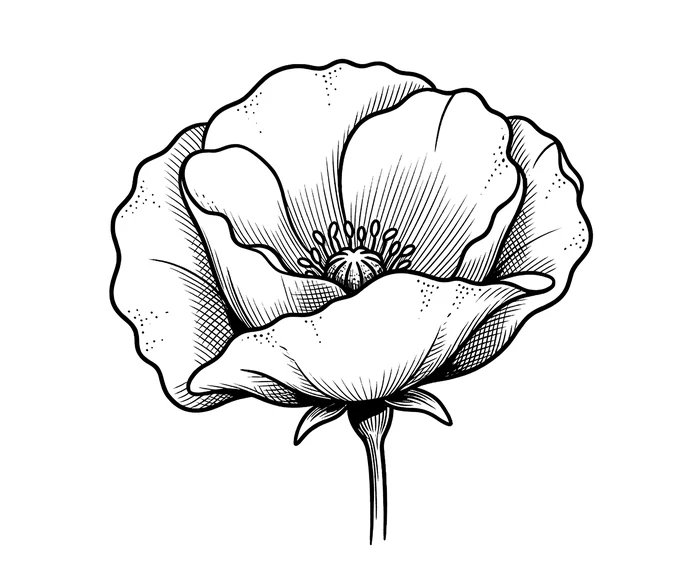
A poppy bloom engraving, its petals begun in soft stipple and the dark center seed-head marked in solid black.

From the botanicalsRewards restraint

A pale bloom is almost all light, so resist the urge to fill it — sparse stipple across the petals, a whisper of hatching down one edge to round them. The single dark note is the seed-head at the center: that's your one place for solid black. The contrast is the whole picture.

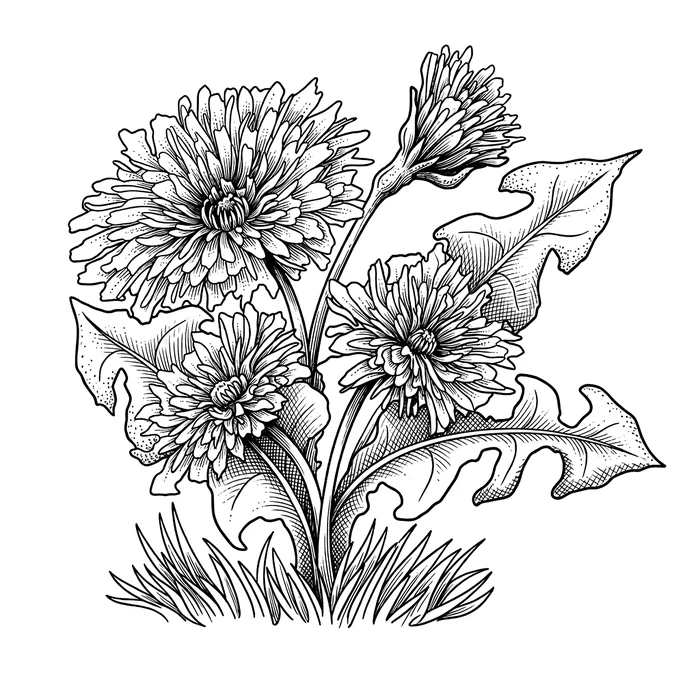
A dandelion engraving gone to seed, its soft crowns rendered in dense stippling above hatched, curving leaves.

From the botanicalsPure texture

The most meditative kind of page. Work the leaf ribs as parallel hatching that follows the curve — let the lines do the rounding for you. Underneath, where it turns away from the light, layer cross-hatch until it's genuinely dark. Ten quiet minutes and you'll have something that looks like it wandered out of an old botanist's notebook.

Try before you buy — two plates, on me.

A butterfly and a botanical from Butterflies & Botanicals, plus the four-pattern key and a note from me on how I'd finish each one. Print them, go find a good pen (splurge — you'll thank yourself), and see if this is your kind of quiet.

No flood of email, promise. Just the two plates now, and the occasional hello when a new book is ready. Leave anytime.

The first book

Stipple & Line: Butterflies & Botanicals

40 hand-picked butterfly, moth, and botanical plates, each partly inked and waiting to be finished. Pure black-and-white, printed single-sided so ink and fineliners won't bleed through — with a one-page key to the four shading patterns, so you can start cold.

Coming soon on Amazon

Nearly at the printer. Want to know the moment it's live? The free plates come with exactly that kind of hello.